Get an editor-style summary in seconds, generated by Claude.
The Agreement
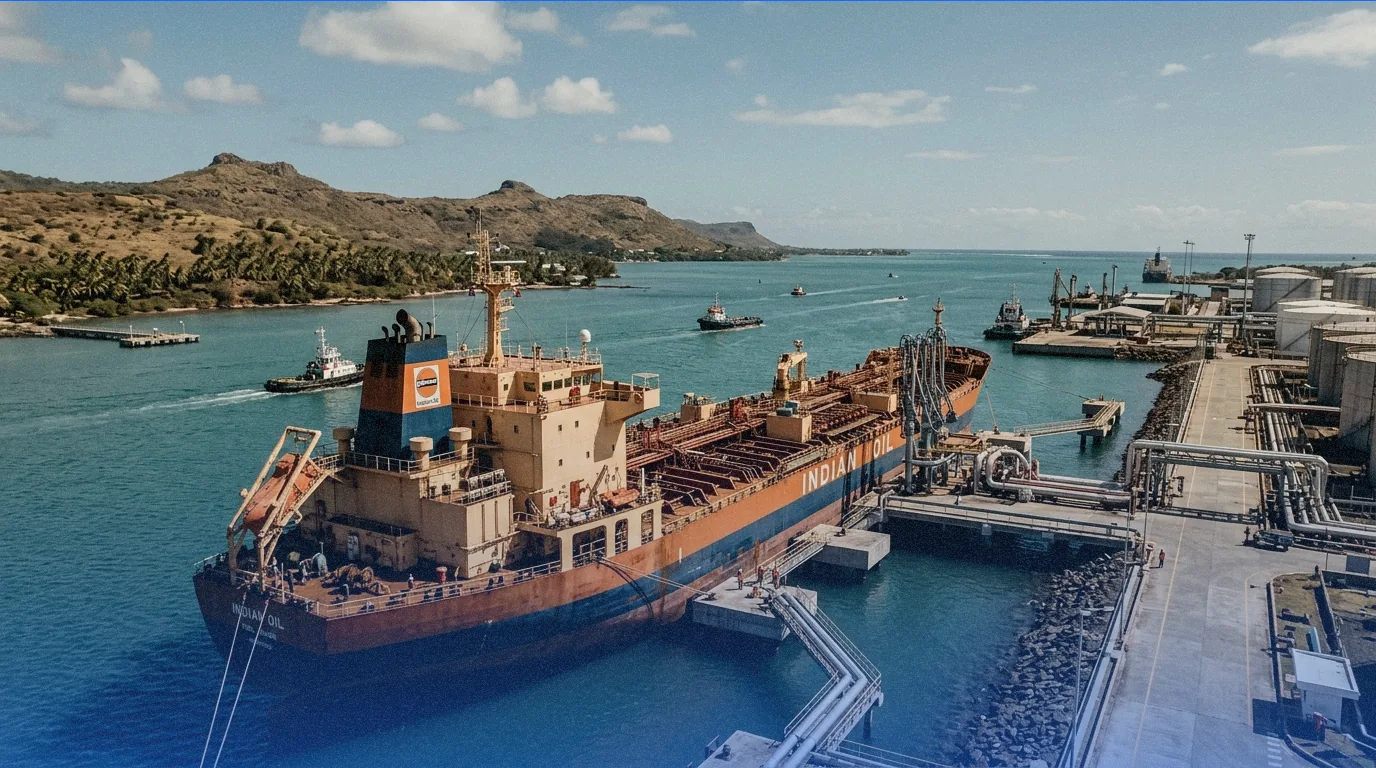
Indian Oil Corporation Limited (IOCL), India's largest commercial enterprise and integrated energy major, has formalised an energy partnership agreement with Mauritius covering petroleum product supply, storage infrastructure, and downstream collaboration. Concluded under the framework of bilateral economic engagement between the two governments, the deal represents a structured, long-term commitment to energy security for the island nation. It extends IOCL's established overseas operations in Sri Lanka, the Middle East, and Southeast Asia, where the corporation has built a credible track record as a reliable, government-backed energy partner.
Key Outcomes at a Glance
While the granular operational terms remain subject to bilateral confidentiality norms, such IOCL-led international agreements typically encompass the following measurable commitments:
- Long-term petroleum product supply to Mauritius at negotiated sovereign rates, providing price stability unavailable through spot-market procurement - Technical assistance for the development of fuel storage terminals and distribution infrastructure on the island - Capacity building programmes for local Mauritian energy sector personnel - Potential equity participation by IOCL in downstream retail or storage assets within Mauritius - A replicable diplomatic and commercial template for Indian energy engagement with other Indian Ocean island states
Strategic Context
Mauritius occupies a pivotal position in the western Indian Ocean, and energy security has long been a structural vulnerability for its import-dependent economy. India's engagement through a public-sector major like IOCL brings institutional reliability, competitive pricing, and government-backed supply assurances that purely commercial contracts cannot guarantee. This agreement fits squarely within the SAGAR vision articulated by Prime Minister Narendra Modi, which positions India as a net security provider and development partner for Indian Ocean island states, with energy cooperation as one of its central pillars.
The structure of the Mauritius agreement closely mirrors arrangements IOCL has already executed in Sri Lanka through its subsidiary Lanka IOC, which operates over 200 fuel retail outlets and has become a significant and trusted player in that country's energy retail sector. That Sri Lanka model — combining long-term supply with downstream retail presence — offers a proven blueprint that could directly inform the depth and pace of the Mauritius engagement.
IndianOil's International Growth Trajectory
IOCL's international business division has been progressively building a presence across Asia, Africa, and the Middle East, in direct alignment with the Government of India's broader energy diplomacy objectives. The corporation's overseas ventures are guided by a dual mandate: commercial viability and strategic national interest. These two goals reinforce rather than contradict each other, since a commercially sustainable overseas operation generates the revenues and goodwill needed to sustain long-term geopolitical partnerships.
According to IOCL's publicly disclosed performance data, its international operations contribute meaningfully to foreign exchange earnings and strengthen India's soft power in regions where China and Gulf sovereign entities have historically been the dominant energy suppliers. The Ministry of Petroleum and Natural Gas has consistently encouraged PSU energy majors to pursue such partnerships as deliberate instruments of economic statecraft, recognising that energy supply relationships create durable bilateral dependencies that diplomatic agreements alone cannot achieve.
Implications for India–Mauritius Relations
India and Mauritius share deep civilisational, cultural, and economic bonds that predate modern statecraft. The two countries signed a Comprehensive Economic Cooperation and Partnership Agreement (CECPA) in 2021 — the first such agreement India concluded with an African nation — signalling the strategic priority both governments place on the bilateral relationship. Energy cooperation through IOCL now adds a critical physical infrastructure dimension to this already multi-layered relationship, moving it beyond trade and finance into the domain of essential services.
For Mauritius, diversifying its energy supply sources while deepening engagement with India reduces dependence on spot-market procurement and provides greater price predictability — a significant macroeconomic benefit for an economy heavily reliant on tourism and services, where fuel cost volatility has an outsized impact on inflation and household welfare.
Broader Significance for the Indian Ocean Region
This agreement is not an isolated transaction but part of a deliberate and systematic pattern of Indian energy engagement across the Indian Ocean littoral. From the India–Sri Lanka petroleum pipeline feasibility studies to fuel supply arrangements with Nepal and Bhutan, India is steadily building an energy architecture that reinforces regional interdependence and positions New Delhi as the preferred partner of choice for smaller neighbouring economies.
Analysts tracking India's development diplomacy note that IOCL's role as an instrument of statecraft is particularly effective precisely because it combines governmental credibility with commercial professionalism. This dual character makes IOCL a preferred partner for smaller economies that seek stability, transparency, and long-term commitment over the opportunism that can characterise purely market-driven energy relationships.
What to Watch
Stakeholders should monitor the pace of infrastructure project execution under the agreement, particularly any announcements regarding terminal storage development or retail network expansion in Mauritius. Progress on these fronts will be the clearest indicator of the depth of commitment on both sides. A successful delivery record in Mauritius could serve as a compelling template for similar arrangements with other Indian Ocean island states — including Maldives, Comoros, and Seychelles — where India's energy diplomacy remains actively and ambitiously engaged.