
Get an editor-style summary in seconds, generated by Claude.
Government Confirms Uninterrupted LPG Supply
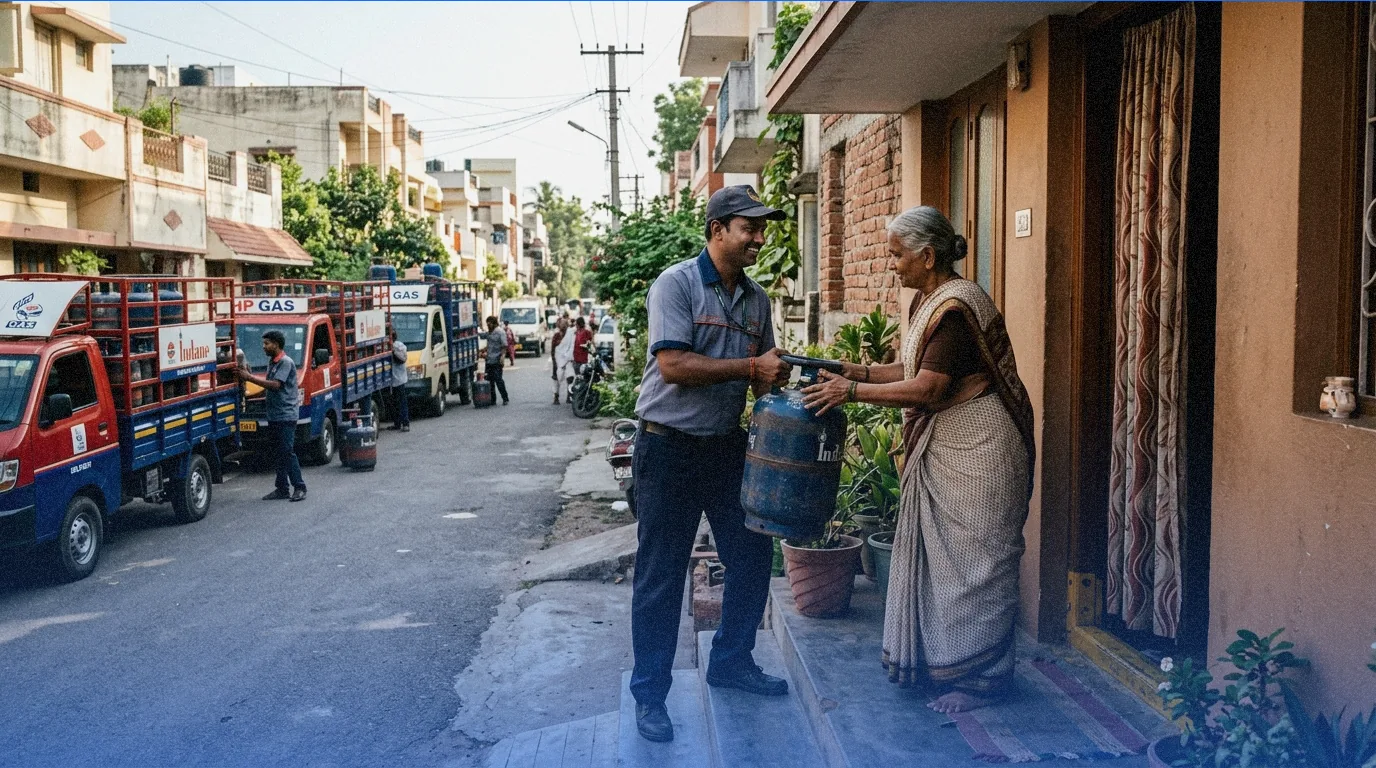
At an inter-ministerial briefing in New Delhi on April 9, 2026, Joint Secretary at the Ministry of Petroleum and Natural Gas Sujata Sharma confirmed that India is maintaining 100% LPG supply to domestic households nationwide. No dry-outs have been reported at any LPG distributor, signalling that the last-mile delivery network remains operationally intact despite the ongoing West Asia crisis.
The briefing brought together senior officials from multiple ministries to present a coordinated picture of India's energy, maritime, and pharmaceutical resilience in the face of disrupted global supply chains.
Key Outcomes at a Glance
- **51 lakh** LPG cylinders delivered to homes on April 8, 2026 alone - **92%** national adoption rate for OTP-based LPG delivery - **98%+** of bookings now placed online - **10 lakh+** commercial LPG cylinders sold since March 23, 2026 - **4 lakh+** new piped natural gas (PNG) customers registered in recent weeks
Delivery Scale and Digital Adoption
The volume of LPG distribution on a single day underscores the robustness of India's domestic energy infrastructure. OTP-based LPG delivery — a transparency and accountability measure — has reached a 92% adoption rate nationally, while online booking has crossed the 98% mark, demonstrating rapid digitisation of the fuel delivery ecosystem. These figures align with the long-term goals of the Pradhan Mantri Ujjwala Yojana and related clean cooking initiatives, which have significantly expanded the LPG beneficiary base over the past decade.
In parallel, the government has expanded the piped natural gas network, with over four lakh new PNG customers registered in recent weeks — diversifying energy access and reducing dependence on cylinder-based distribution in urban and peri-urban areas.
Commercial Supply, Crude Inventories, and Refinery Operations
Beyond household needs, Joint Secretary Sharma confirmed that bulk non-domestic LPG supply has been restored for critical sectors including food processing, polymer manufacturing, and agriculture. More than ten lakh commercial LPG cylinders have been sold since March 23, 2026, indicating that industrial activity has resumed at meaningful scale following earlier supply stress.
Sharma also reassured stakeholders that crude oil inventories held within India remain adequate and that domestic refineries are currently operating at optimum capacity. This dual confirmation — strategic reserves intact and refining throughput maintained — carries particular significance given that international crude procurement routes through the Gulf have been under heightened scrutiny. According to News on AIR's coverage of the briefing, the coordinated inter-ministerial response has so far prevented any cascading domestic energy disruption.
Maritime Operations and Seafarer Safety
Additional Secretary of the Ministry of Ports, Shipping and Waterways Mukesh Mangal reported that the Indian-flagged LPG carrier Green Asha safely arrived at Jawaharlal Nehru Port Authority on April 9, having transited the Strait of Hormuz on April 5. The vessel's safe passage is a positive data point in an otherwise volatile maritime corridor. Mangal further noted that DG Shipping has facilitated the safe repatriation of over 1,800 Indian seafarers from Gulf locations to date, including 49 in the preceding 24-hour period. Port operations across India continue without congestion, and no incidents involving Indian-flagged vessels or Indian seafarers have been reported in the immediate reporting window.
Pharma Inputs: Duty Relief and Supply Coordination
Joint Secretary in the Department of Pharmaceuticals Satyaprakash T. L. addressed concerns about disruptions to global pharmaceutical supply chains. While acknowledging that the West Asia crisis has affected the flow of pharma inputs internationally, he confirmed that no significant price escalation in drugs or pharmaceuticals has been observed domestically. As a structural intervention, the government has reduced customs duty on 40 petrochemical products to zero, a measure designed to support the pharma industry's raw material access and preserve drug affordability. The Ministry of Chemicals and Fertilizers and related departments are working in close coordination to prevent any shortage of essential inputs.
What This Signals for India's Energy Resilience
The inter-ministerial briefing collectively signals that India's energy security architecture — spanning domestic LPG distribution, maritime logistics, refinery operations, and PNG expansion — has demonstrated meaningful resilience in the face of an external geopolitical shock. High digital adoption rates in LPG delivery and the scale of daily cylinder distribution reflect years of infrastructure investment translating into operational dividends precisely when they are most needed. For policymakers and development observers, the episode reinforces the strategic value of supply chain diversification, digital delivery systems, and proactive inter-agency coordination as instruments of national energy security.