Get an editor-style summary in seconds, generated by Claude.
The scheme and its ambition
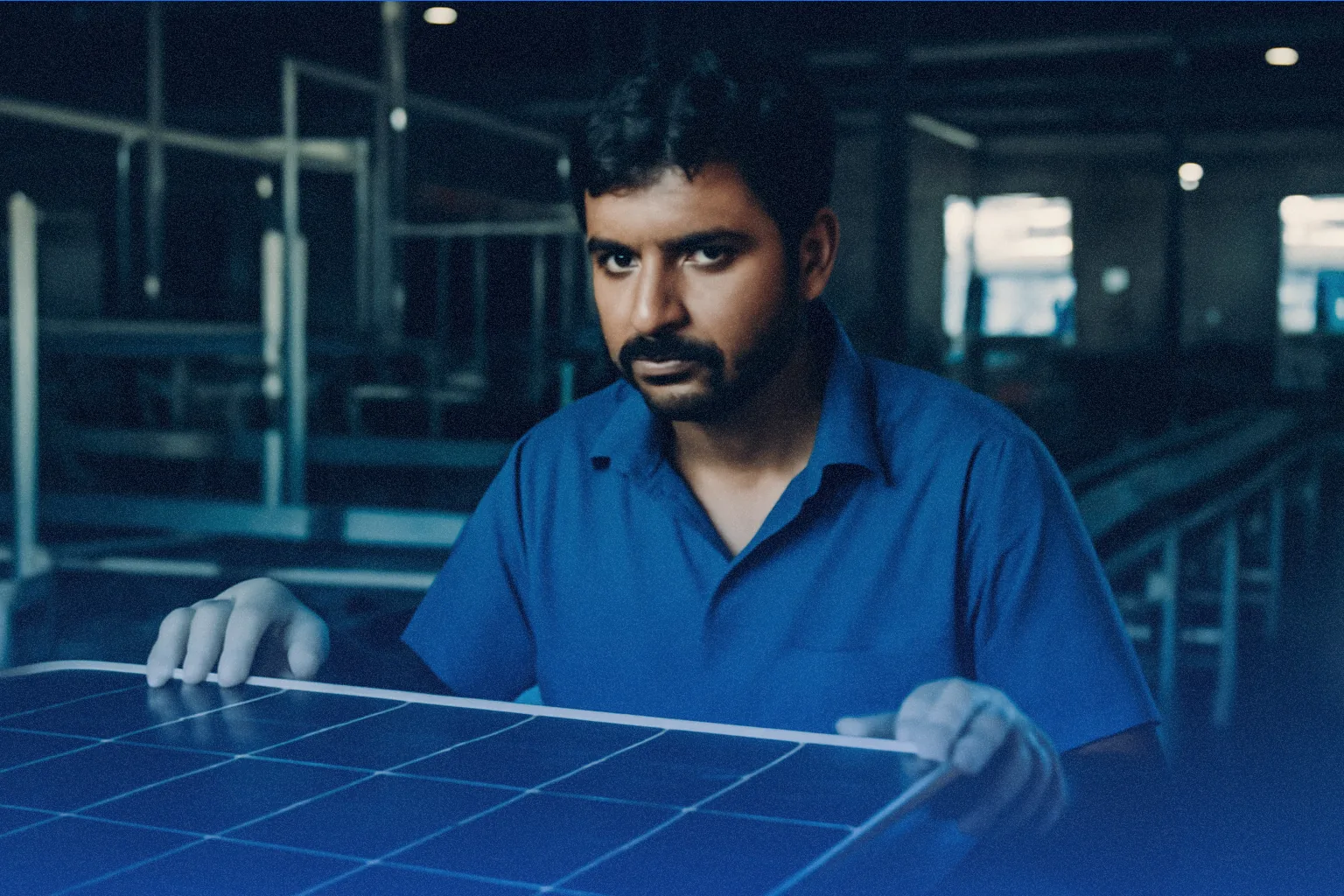
Launched under the Ministry of New and Renewable Energy, the Solar PLI scheme was designed to break India's deep dependence on imported photovoltaic cells and wafers—primarily from China—by incentivising domestic production of high-efficiency solar modules. The second tranche, with an outlay of approximately ₹24,000 crore, targets an incremental manufacturing capacity of roughly 40 GW over five years, positioning India as both a self-sufficient and globally competitive module supplier.
The logic is straightforward: incentive payouts are linked to actual sales of domestically manufactured modules, not to capacity creation alone. This production-linked structure was intended to weed out rent-seekers and reward genuine industrial investment. Whether that firewall is holding is now the central question.
Who got selected and what they committed
The second round attracted bids from a broad industrial spectrum—established conglomerates, renewable energy developers, and emerging clean-tech firms. Selected beneficiaries submitted capacity commitments spanning integrated manufacturing (from polysilicon or ingot through to finished module) and module-only tiers. The MNRE's approved list includes names such as Reliance Industries, Adani Solar, Waaree Energies, Premier Energies, and several mid-tier players, collectively promising to reshape India's solar supply chain.
The tiered structure of Round 2 rewarded integrated manufacturers—those covering more upstream stages—with higher per-unit incentives, nudging industry toward genuine value-chain depth rather than simple module assembly. On paper, this represented a sophisticated policy design. In practice, the upstream stages—cell, wafer, and ingot manufacturing—remain the most capital-intensive and technically demanding to establish.
Where verified capacity stands today
India's total installed solar module manufacturing capacity has grown substantially, crossing 60 GW of nameplate capacity by early 2024 according to industry estimates, with cell manufacturing lagging significantly behind at under 10 GW. However, nameplate capacity and operational, quality-certified capacity are not the same metric. Several PLI beneficiaries are known to have commenced module lines, but the proportion of plants running at the efficiency thresholds mandated by the scheme—a minimum of 20% module efficiency for monocrystalline PERC and higher for TOPCon—is subject to ongoing verification by the Bureau of Energy Efficiency and MNRE's empanelled testing agencies.
Industry observers note that disbursement data—the clearest proxy for verified production—has been modest relative to the total outlay, suggesting either production ramp-up is behind schedule, that beneficiaries are banking incentive claims for consolidation, or that compliance documentation is creating administrative friction. MNRE has not yet published a granular, company-wise disbursement scorecard, which limits independent accountability.
The upstream gap: cells, wafers, and the China question
The most structurally significant concern is that India continues to import the majority of its solar cells and virtually all of its wafers. According to the Ministry of Commerce trade data, solar cell imports from China remained elevated through 2023-24, even as domestic module output climbed. This means a portion of modules stamped 'Made in India' contain imported cells, which may qualify for PLI payouts under certain tier definitions but do not represent the supply-chain independence the scheme was designed to achieve.
Several PLI winners who committed to integrated manufacturing—cells and modules—have reportedly sought timeline extensions for cell line commissioning, citing equipment procurement delays and the steep learning curve of thin-film and TOPCon cell technology. The government's response to these extension requests will signal how firmly the programme is enforcing its original conditionalities.
Green shoots: where real capacity is emerging
The picture is not uniformly cautious. Waaree Energies, which completed a high-profile IPO in 2024, has commissioned significant module capacity and is progressing on cell manufacturing. Premier Energies has begun exporting modules to the United States, demonstrating that Indian production can meet international quality standards. Adani Solar's integrated facility in Gujarat represents one of the most ambitious vertically integrated bets in the sector.
Beyond the large players, the PLI ecosystem appears to be catalysing ancillary investments—in glass, aluminium frames, ethylene vinyl acetate encapsulants, and backsheets—that were previously imported. This quiet indigenisation of the balance-of-module supply chain may prove as durable an outcome as the headline GW numbers.
Policy levers that will determine the outcome
Three policy variables will largely decide whether Round 2 delivers on its manufacturing promise. First, the Basic Customs Duty regime on imported cells and modules must remain stable; any softening under procurement cost pressures would undercut the economic rationale for domestic investment. Second, MNRE's enforcement of efficiency thresholds at disbursement stage must be rigorous—allowing sub-threshold modules to claim incentives would debase the scheme's quality signal. Third, the pipeline of domestic demand, particularly from large government tenders under PM Surya Ghar and utility-scale auctions, must absorb rising domestic supply; without assured offtake, manufacturers face a working capital crunch regardless of incentive eligibility.
The NITI Aayog's energy transition roadmap anticipates solar as the backbone of India's 2070 net-zero trajectory, which implies module demand compounding at rates that domestic industry must eventually satisfy without import dependence.
The accountability gap and what needs to change
Perhaps the most actionable recommendation emerging from a close reading of PLI Round 2 is the need for a quarterly, public disbursement dashboard—company-wise, capacity-wise, and technology-tier-wise—published by MNRE. Such transparency would allow capital markets, analysts, and policymakers to distinguish genuine industrial builders from slow movers, and would create competitive reputational pressure that no administrative review can fully replicate.
India's solar PLI is neither a failure nor an unqualified success at this juncture—it is a work in industrial policy in progress. The ₹24,000-crore outlay represents a serious national wager on domestic capability. Whether that wager pays off will depend less on the scheme's design, which is broadly sound, and more on the rigour with which it is administered over the critical 2025–2027 delivery window.