
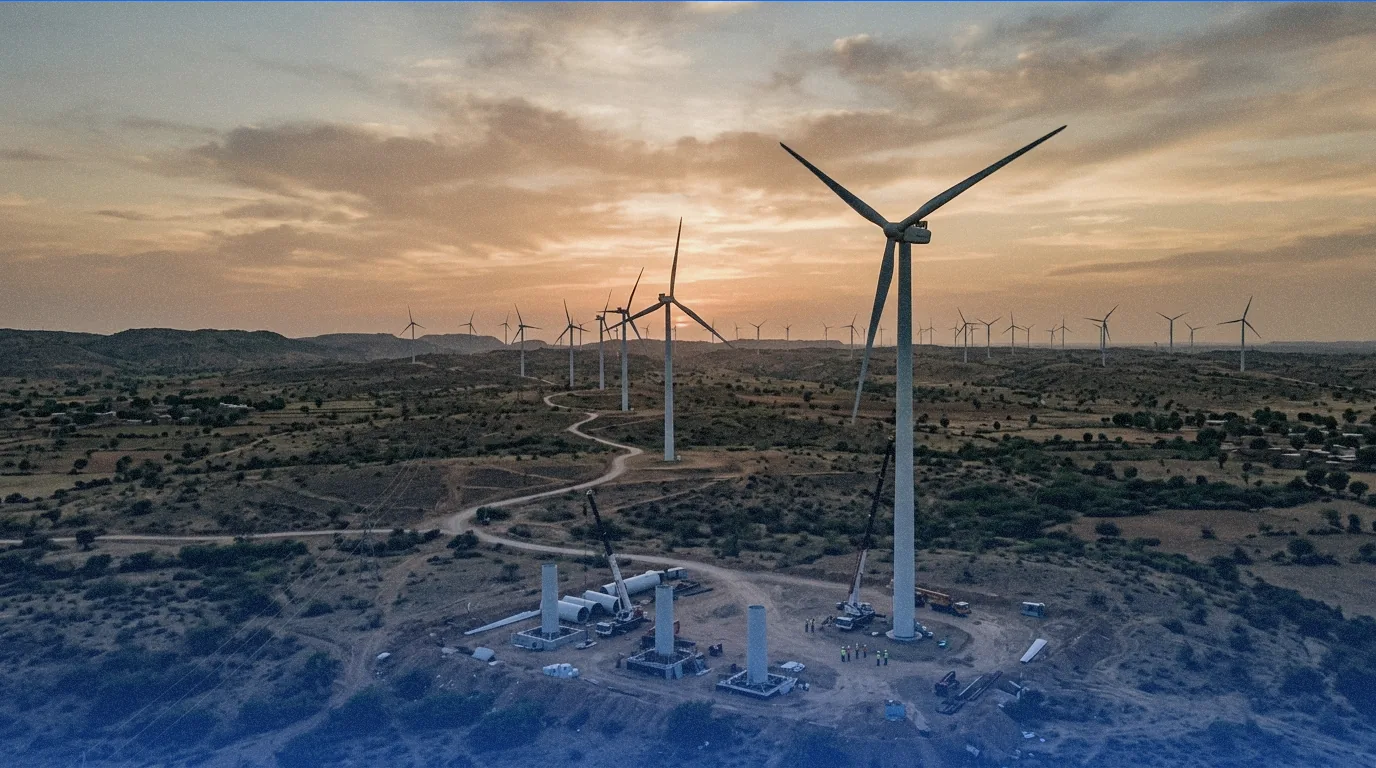
Ayana Renewable Power Pvt. Ltd., a subsidiary of the 50:50 NTPC Green Energy–ONGC Green joint venture, won a 50 MW wind power allocation in SECI's Wind Tranche-XX auction on 15 July 2026 at a tariff of ₹3.85 per kWh. The project forms part of a 2,000 MW ISTS-connected wind tender and was secured through SECI's e-reverse auction mechanism. NTPC Green Energy disclosed the win via a stock exchange regulatory filing on the same day. The award represents a modest but active participation by PSU-backed entities in India's competitive renewable energy auction market.
India's public sector energy landscape took another step towards its renewable transition on 15 July 2026, when Ayana Renewable Power Pvt. Ltd. emerged as the successful bidder for a 50 MW wind power project in the Solar Energy Corporation of India's latest competitive auction. The win is significant not merely for its megawatt count, but for what it reveals about how India's state-owned energy giants are structuring themselves to compete — and win — in a market increasingly shaped by private and foreign capital.
The Architecture of the Bid
Ayana Renewable Power is a wholly owned subsidiary of ONGC NTPC Green Pvt. Ltd., itself a 50:50 joint venture between NTPC Green Energy Ltd. (NGEL) and ONGC Green Ltd. This layered corporate structure — a JV spawning a subsidiary that then bids independently — reflects the strategic sophistication that PSUs have been forced to develop as renewable energy auctions have grown more competitive and technically demanding.
The project was awarded under SECI Wind Tranche-XX, a tender that invited bids for 2,000 MW of interstate transmission system (ISTS)-connected wind power projects across India. Ayana secured its 50 MW allocation through SECI's e-reverse auction mechanism, a format designed to drive tariffs to their most competitive level through successive electronic bidding rounds.
The winning tariff of ₹3.85 per unit (kWh) will now serve as the contracted rate at which Ayana sells power from this project. That figure merits contextualisation. Wind tariffs in India have broadly trended lower over the past decade as turbine technology matures and financing conditions improve, though land acquisition challenges and grid connectivity costs can create floor prices. Whether ₹3.85 per kWh represents an aggressive bid or a measured one will depend on the eventual project site and transmission costs — details that are yet to be disclosed publicly.
PSU Collaboration as Competitive Strategy
The NTPC Green-ONGC Green joint venture is, in many ways, a product of policy logic. Both parent companies carry strong balance sheets, sovereign backing, and existing infrastructure relationships — advantages that translate directly into the ability to absorb long project development timelines and bid competitively on tariffs without the short-term return pressures that private developers sometimes face.
For NTPC Green Energy, which was listed on the stock exchanges and has been expanding its clean energy portfolio at pace, auction wins of this nature serve a dual purpose: they add capacity to the generation pipeline and demonstrate to the market that the entity can compete effectively without relying on captive offtake from NTPC's thermal fleet. The development was disclosed through a regulatory filing with stock exchanges on the same day as the auction, 15 July 2026, in keeping with listing obligations.
For ONGC, the clean energy pivot is arguably more consequential. As a company whose core revenues remain tied to hydrocarbon exploration and production, ONGC's participation in wind and solar auctions through ONGC Green signals a recognition that the energy transition is not a distant policy aspiration but a present commercial reality. Winning shelf space in SECI auctions now is how these companies secure their place in India's 2030 and 2047 energy narratives.
Scale in Perspective
A 50 MW allocation within a 2,000 MW tranche is, by any measure, a modest slice. It would be premature to read this single win as evidence that the NTPC-ONGC combine has found its stride in renewable auctions. What it does confirm is that the JV is active, bidding, and willing to accept market-determined tariffs rather than seeking administered pricing comfort.
India's renewable energy ambitions — anchored in targets for installed clean energy capacity and long-term net-zero commitments — will require hundreds of such auctions and thousands of such project wins over the coming decades. PSUs that build the institutional muscle to participate consistently, rather than episodically, will be better placed to claim a meaningful share of that buildout.
For now, Ayana Renewable Power's 50 MW win is a data point worth watching — one that suggests India's public sector is learning, slowly but deliberately, to speak the language of competitive clean energy markets.
