
Get an editor-style summary in seconds, generated by Claude.
A larger grid, but not yet a biogas grid
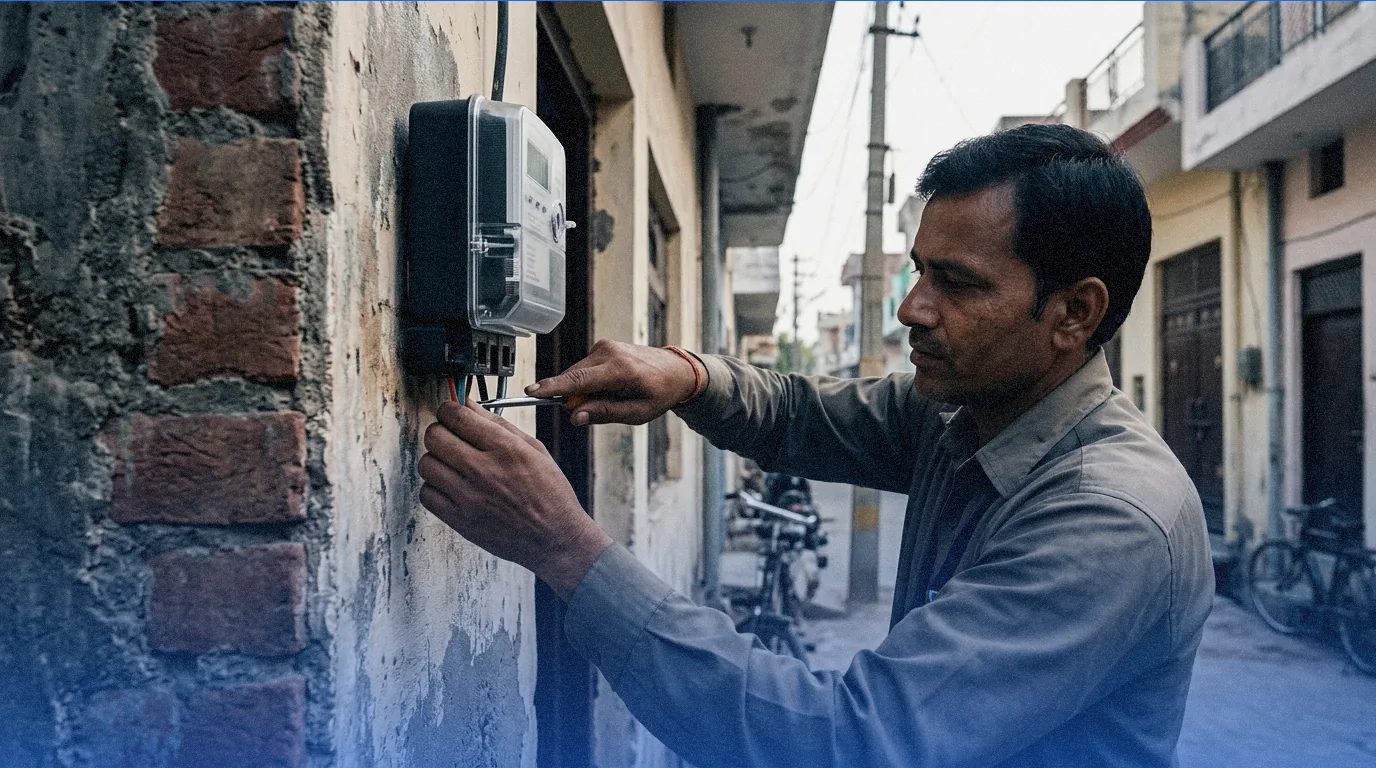
India’s city gas distribution network has expanded well beyond the largest metropolitan markets. Successive bidding rounds conducted by the Petroleum and Natural Gas Regulatory Board have extended authorised geographical areas across most of the country, bringing compressed natural gas stations and piped natural gas networks to many Tier-2 cities and adjoining districts.
This creates a strong demand-side opportunity for compressed biogas, or CBG. Yet an authorised city gas area is not the same as an injection-ready network. Many newer markets are still building trunk pipelines, compression capacity, industrial connections and household demand, while some remain dependent on gas transported by road rather than supplied through a connected pipeline.
SATAT created supply-side momentum
The Sustainable Alternative Towards Affordable Transportation initiative, or SATAT, sought to build a commercial market for purified and compressed gas produced from agricultural residue, cattle dung, municipal waste and other organic feedstock. The SATAT platform enabled oil and gas marketing companies to invite expressions of interest and offer prospective producers an organised off-take route.
The programme helped establish CBG as more than a waste-management intervention: it can displace fossil gas, create value from dispersed biomass and generate bio-manure as a co-product. The GOBARdhan initiative has further brought together information on biogas and CBG projects. However, plant commissioning has been slower than the initial ambition, reflecting challenges in feedstock aggregation, financing, technology performance and dependable sales.
Where city gas networks can help
A functioning CGD network can give a CBG plant access to several customer segments rather than a single buyer. Once compatible gas enters the network, it can theoretically serve transport CNG demand, commercial kitchens, households and industrial consumers. This diversified demand can reduce dependence on moving every cascade to a distant retail outlet.
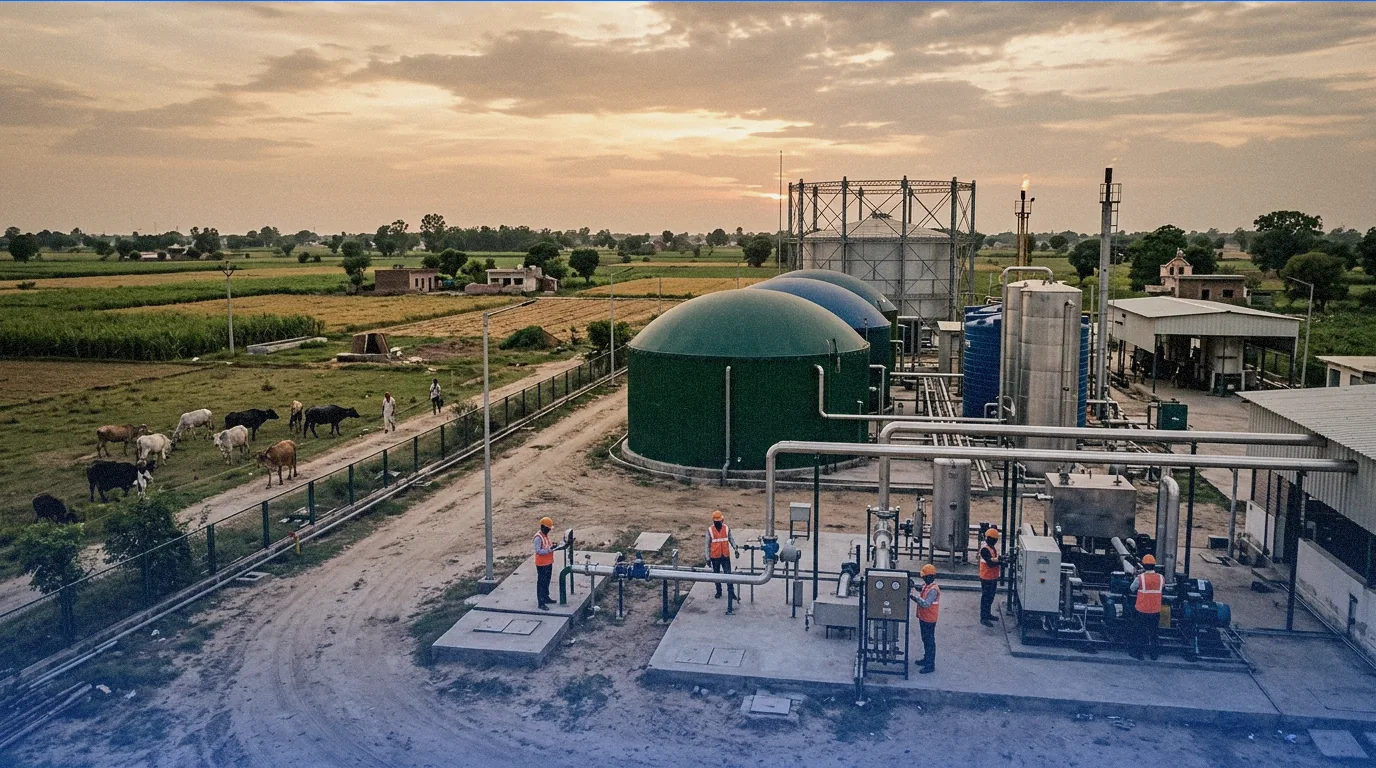
Tier-2 cities may be particularly suitable because many are surrounded by high-density sources of crop residue, livestock waste, food-processing by-products and segregated municipal organic waste. Shortening the distance between feedstock, production and consumption can improve project economics. The network’s value, however, depends on whether a nearby medium-pressure pipeline has adequate capacity and stable daily demand.
The missing middle is injection infrastructure
Pipeline injection requires more than connecting a plant to the nearest visible gas line. CBG must meet prescribed specifications for methane content, moisture, contaminants and calorific value. Projects also need metering, pressure regulation, compression, odorisation where applicable, isolation systems, continuous quality monitoring and a clearly allocated point of custody transfer.
These facilities can impose disproportionate costs on smaller plants, especially when the nearest suitable pipeline is several kilometres away. Operational rules also matter: the producer and distributor must agree on nomination, balancing, shutdowns, rejected gas, measurement and payment. India has technical and regulatory institutions for gas-market development, including the Ministry of Petroleum and Natural Gas and PNGRB, but injection arrangements still need greater standardisation across CGD areas.
Off-take must become more bankable
Long-term purchase certainty is central to project finance. A letter of intent can demonstrate market interest, but lenders also examine the buyer’s obligation to take gas, the pricing formula, escalation, minimum quality, payment security and the treatment of volumes that cannot be accepted on a given day. Projects remain exposed if these provisions vary widely between buyers or are renegotiated after commissioning.
The phased CBG blending obligation for city gas distribution is an important demand signal. Its impact will depend on implementation mechanisms that make compliance measurable and allow distributors to procure from efficient plants even when those facilities are not located directly beside an injection-ready pipeline. The broader policy direction is consistent with India’s biofuel objectives outlined by the Ministry’s biofuels programme.
A cluster-based pathway to scale
The practical next step is to plan CBG and CGD infrastructure together. Regulators, state agencies and distributors could identify biomass-rich clusters, publish maps of suitable pipelines and demand centres, and establish standard technical and commercial connection agreements. Shared injection hubs could aggregate gas from multiple nearby plants, reducing duplicated compression, testing and metering costs.
CBG will not scale merely because city gas licences cover more territory. It will scale when producers can see a financeable route from feedstock to pipeline, and distributors can receive consistent gas without compromising safety or network operations. India now has the beginnings of both supply and demand; the development task is to build the connective infrastructure between them.